
Faith Against Reason
Under the Banner of HeavenThis thread tracks the book’s examination of belief that withstands evidence, the personal costs of suppressing doubt, and the different ways characters either surrender to certainty or reclaim the right to question.
increasing Bearing strength in each event
 decreasing
Bearing strength in each eventdecreasingThe Gold Plates and Proof
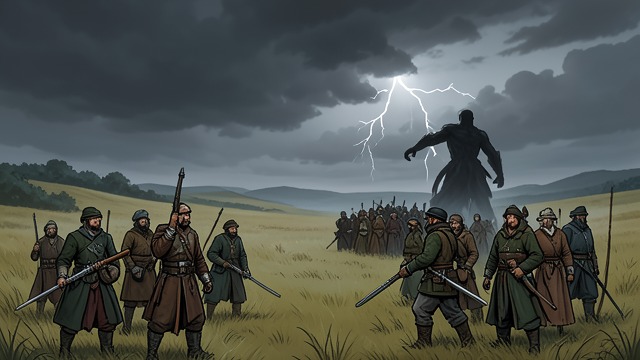
Revelation with Material Form
Joseph Smith said an angel named Moroni directed him to Gold Plates and that divinely provided instruments enabled him to translate their record. Witnesses testified that they saw or handled the plates, and the resulting The Book of Mormon offered converts a sacred history set in the New World.
Experience Beyond Verification
The plates gave the new faith a vivid claim to historical evidence, but they were returned and could not later be examined by critics. Disputes about archaeology, history, and the text’s claims therefore could not be resolved simply by inspecting the original object.
The book uses this founding story to examine the relationship between religious conviction and empirical proof. Testimony and personal experience can create powerful certainty for believers, while remaining inaccessible or unpersuasive to those who require publicly verifiable evidence.
A Book Against Uncertainty
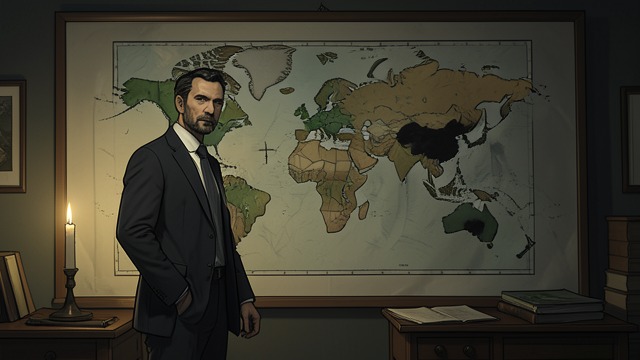
A Clear Map of Good and Evil
The religious ferment of the Second Great Awakening offered many Americans new ways to explain salvation, history, and the approaching end of the world. Joseph Smith’s movement promised direct guidance from God, a restored church, and a clear division between those who belonged to the faithful and those who rejected the truth.
Certainty’s Emotional Appeal
Such a framework answered questions that unsettled people could find difficult to bear. It promised purpose, belonging, and a way to distinguish good from evil without leaving every decision open to doubt.
The book recognizes that certainty can console as well as constrain. The danger emerges when the comfort of an all-encompassing explanation makes counterevidence appear irrelevant and turns interpretive flexibility into a threat to faith itself.
DeLoy’s Scientific Doubts

Questions Once Forbidden
Raised in the FLDS community, DeLoy Bateman learned to avoid questions that seemed to conflict with doctrine. Studying geology in college brought the earth’s great age into direct tension with his community’s belief that it was only thousands of years old.
Learning to Reopen the Question
Education did not immediately make DeLoy abandon his faith. He remained within the community for years, gradually confronting contradictions he had trained himself not to examine. His eventual departure followed a broader recognition that prophets could be mistaken and that religious explanations did not resolve every conflict between doctrine and evidence.
DeLoy’s story contrasts with the certainty of people who treat doubt as disloyalty. His skepticism was neither effortless nor free of loss: he remained emotionally attached to his home and community. The thread presents critical inquiry as a difficult act of responsibility rather than a simple escape from belief.
A Prosecutor’s Religious Upbringing
Irrational Beliefs and Shared Culture
Psychiatrist Noel Gardner testified that some of Ron Lafferty’s unusual ideas had roots in the religious world he knew from childhood. Gardner compared them with beliefs he had learned in his own conservative religious family, including the idea that the earth was created in six days a few thousand years ago.
The Problem of a Boundary
The comparison unsettled any easy division between ordinary faith and clinical delusion. A belief can be scientifically unsupported yet socially transmitted, and its familiarity within a community may help explain why a believer accepts it without making it true.
Gardner’s testimony did not establish that Ron’s beliefs were harmless or excuse the murders. Instead, it showed why a court must distinguish unusual conviction from incapacity while also confronting the fact that religious culture can normalize ideas outsiders regard as irrational.
The Unresolved Choice
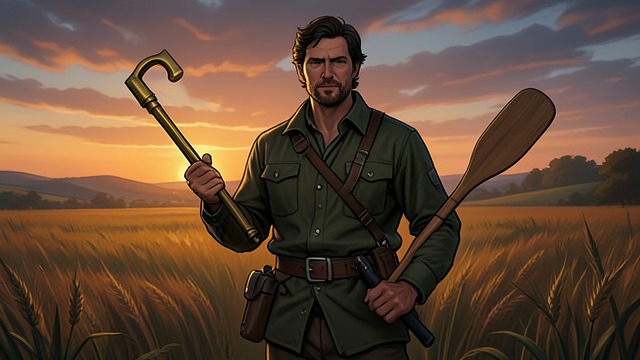
Living Without a Final Answer
In the closing remarks, Jon Krakauer states that he does not know whether God exists and describes uncertainty as part of being alive. He acknowledges that fear, despair, and unexpected beauty can draw him toward prayer, without treating that impulse as proof of a settled theology.
Belief and Intellectual Responsibility
The book’s ending places this uncertainty against systems that claim exclusive possession of truth and classify rival beliefs as evil. It does not replace those systems with certainty of its own; instead, it argues that accepting mystery may be preferable to surrendering judgment to an inflexible creed.
That position leaves religious experience open to study without requiring either reverence or dismissal. The final emphasis is on responsibility: people can acknowledge the human need for meaning while remaining alert to the damage that occurs when doubt is forbidden and authority claims exemption from scrutiny.
1823–1830, from Joseph Smith’s first account of Moroni to the Church’s organization
During the early nineteenth-century Second Great Awakening
1960s–1990s, from college study to his departure from the FLDS community
During the 1996 retrial testimony on Ron Lafferty’s competence
January 2003, in the author’s closing reflections
